Comprehensive Dance Teacher Resources List
This is a comprehensive list of all FREE webinars and resources, paid workshops, and in-person and online courses I offer.
Live Practical Courses

The Savvy Dance Teacher
Applied Dance Science Teacher Training Course
A 2-day live, practical course for dance teachers that teaches the latest in dance science & research so that your dancers can reach their maximum performance potential.
You will learn:
Practical dance science & medicine principles and how to incorporate them into your teaching practice
Applied dance anatomy and how it relates to dancer health and performance
Injury prevention and load management strategies and how they apply to dancers in your studio setting
Pointe Resources
Pre-Pointe Assessment Toolkit
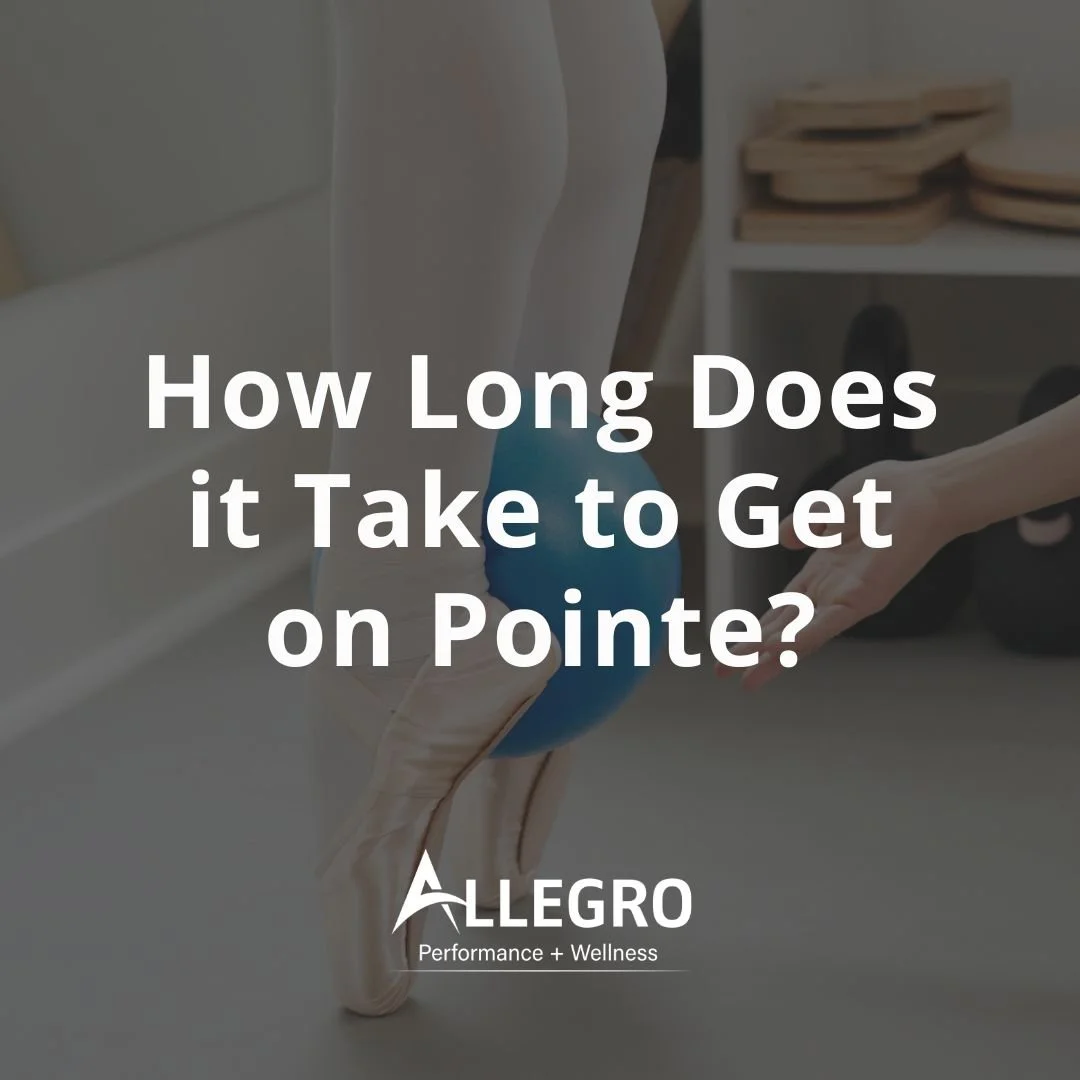
Progressing to pointe work is considered a rite of passage for many young (and not so young!) aspiring dancers. However, it does not come without some risks. Dancing in pointe shoes increases the forces placed on the foot by up to 12x bodyweight, and if progressed too soon can lead to an increased risk of pain and injury.
Historically, dancers were thought to be ready to start training en pointe at 12 years of age. However, with advances in dance science, it is now known that there are many complex factors besides chronological age which can help to determine when it is safe for a dancer to progress en pointe. Their maturity, dance history, chronological age, musculoskeletal maturity, and motor development all play into the decision.
As a dance teacher, knowing when it is safe to progress a dancer to pointe work is a complicated and sometimes stressful process. External pressure from dancers, dance parents, other dance teachers, and the dance industry itself can have you second-guessing your decision.
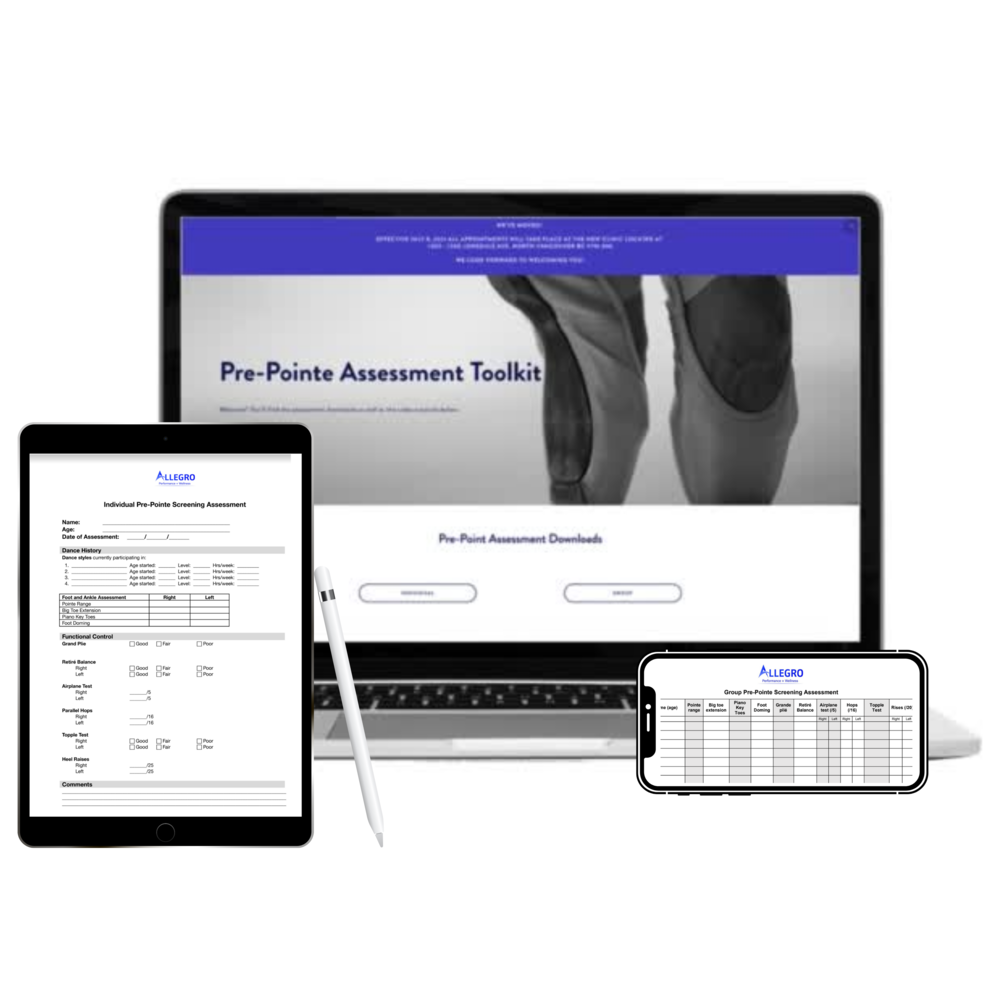
The Pre-Pointe Assessment Toolkit takes the guesswork out of knowing when a dancer is ready to progress. Based on the latest science and research, this comprehensive assessment gives you objective information to make the best decision for your dancer.
The toolkit is an easy-to-use guide that takes you through the who, what, when where, and why of pre-pointe assessment. Included you’ll find:
Comprehensive overview of how to conduct a pre-pointe assessment
Downloadable assessment sheets for both group and individual pre-pointe assessments
Instructional videos for each of the assessment tasks
$99.00

Progressing to pointe work is considered a rite of passage for many young (and not so young!) aspiring dancers. However, it does not come without some risks. Dancing in pointe shoes increases the forces placed on the foot by up to 12x body weight, and if progressed too soon can lead to increased risk of pain and injury.
Historically, dancers were thought to be ready to start training en pointe at 12 years of age. However, with advances in dance science, it is now known that there are many complex factors besides chronological age which can help to determine when it is safe for a dancer to progress en pointe. Their maturity, dance history, chronological age, musculoskeletal maturity, and motor development all play into the decision.
As a dance teacher, knowing when it is safe to progress a dancer to pointe work is a complicated and sometimes stressful process. External pressure from dancers, dance parents, other dance teachers, and the dance industry itself can have you second guessing your decision.
The Pre-Pointe Assessment Toolkit takes the guess work out of knowing when a dancer is ready to progress. Based on the latest science and research, this comprehensive assessment gives you objective information to make the best decision for your dancer.
The toolkit is an easy-to-use guide that takes you through the who, what, when where and why of pre-pointe assessment. Included you’ll find:
Comprehensive overview of how to conduct a pre-pointe assessment
Downloadable assessment sheets for both group and individual pre-pointe assessments
Instructional videos for each of the assessment tasks
Online Education & Paid Courses

Flexibility Foundations — An Online Course for Dance Teachers
A 4-week live, online course for dance teachers that introduces a new way to approach & teach flexibility training so that your dancers can safely and effectively achieve and maintain the flexibility required to excel in today’s dance industry.
Based on the ‘Triple A’ model of Acquire, Assess and Apply – Flexibility Foundations will give you the tools to assess and teach flexibility in a way that harnesses the power of the nervous system to get the flexibility results your dancers WANT and NEED for success in today’s dance world.
Acquire knowledge of the science behind flexibility. We’ll dive into the basic physiological and anatomical components of the musculoskeletal and nervous system and you’ll learn how the interplay between these systems controls mobility and ultimately affects your dancer’s flexibility.
Assess your students. Understanding what’s limiting your dancers progress is the first step in being able to make change. You’ll learn the most effective assessment strategies to determine the biggest limiting factors in your dancer’s flexibility.
Apply. Using the assessment findings, you’ll learn specific interventions aimed at harnessing the power of the nervous system to improve your dancers flexibility.
Enrollment only opens TWO times per year — get on the waitlist so you don’t miss out!
Understanding the Nervous System’s Role in Mobility Training
Do your dancers struggle to get results with traditional stretching practices? join Erika Mayall physiotherapist, for A 90-minute webinar recording that will uncover the missing link in mobility training
In this webinar, you will learn:
The basic physiological and anatomical components of the musculoskeletal and nervous systems
The interplay between these systems and how to recognize and assess it
How you can utilize this interplay to improve the mobility of your dancers in a safe and effective way

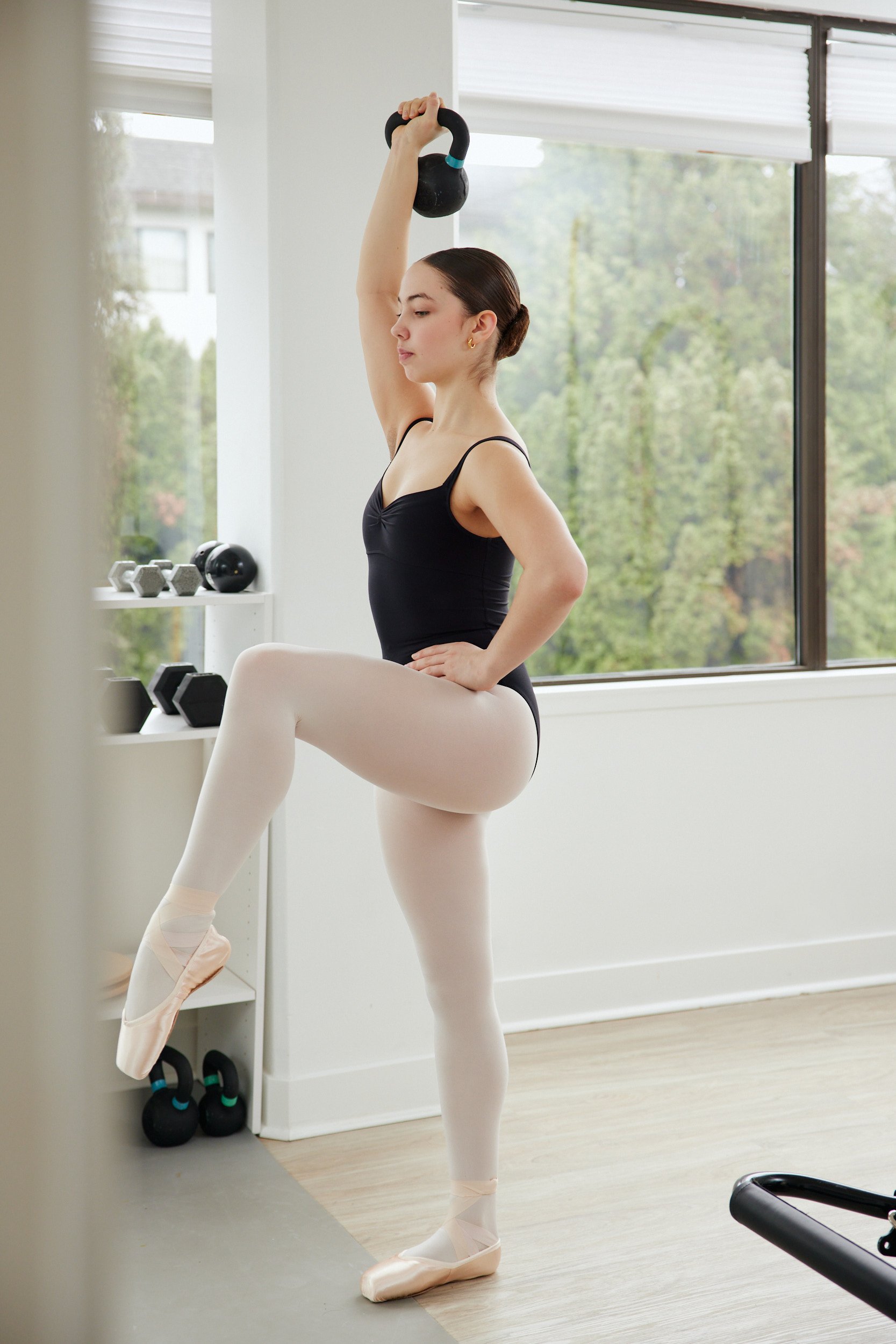
MINI-COURSE
Periodization and Programming for Peak Performance
A 90-minute mini-course that will explore how to set up your dance programs to improve dancer performance, mitigate injury, and help every dancer reach their peak potential.
In this mini-course, you will learn:
Recommended training loads across different age groups so that you can minimize injury and mitigate dancer burnout
How to plan your schedule to easily implement training cycles so each dancer will perform optimally throughout the year
How to effectively implement cross-training and supplementary training programs into your schedule

Free Online Education
Managing Dance Injuries in a Studio Setting
This training is open to all dance studio owners and dance teachers who are invested in helping their dancers manage injuries and reach their fullest potential!
It will cover:
Defining what a dance injury is and how to identify it
Differentiating different types of dance injuries
The current landscape of dance injuries within a studio setting
Strategies that studio owners and dance teachers can use to manage dance injuries when they occur
Resources to create a culture of health and wellness within your studio setting
FREE


Understanding Common Dance Injuries
This training is open to all dance teachers, parents and dancers who are interested in deepening their understanding of common dance injuries and how to prevent them.
It will cover:
Defining what a dance injury is and how to identify it
Differentiating different types of dance injuries
Understanding the anatomy and causes of the most frequently occurring dance injuries
Strategies for preventing common dance injuries
FREE


Evidence Informed Assessment of Pointe Readiness
Do you struggle with knowing if, and when, it’s safe to progress your dancers to training en pointe? Do you experience pressure from students and parents to start pointe work before you feel they are ready?
Join Erika Mayall, registered physiotherapist, for a FREE webinar on Evidence Informed Assessment of Pointe Readiness.
It will cover:
A historical overview of the determinants of pointe readiness
A review of what the current science and research says with regards to assessing pointe readiness
Discussion of the risks and benefits associated with training en pointe
Strategies for implementing evidenced informed assessment of pointe readiness in a studio setting
FREE


Training Turnout in Dancers
Turnout is one the hallmark features in classical ballet and many other forms of dance - and dancers have long strived to achieve the illusive 180 degrees of ‘perfect turnout’. Although we know 180 degrees is often unrealistic, many dancers still strive to improve their turnout as much as possible - sometimes going to unsafe lengths to do so.
In this masterclass, you’ll learn about the anatomy of turnout, what the most common causes of limitations in turnout are, and how to address these limitations to help your dancers achieve their maximum turnout – safely!
FREE

Principles of Strength Training for Dancers
It’s no secret that the physical demands of dance have increased exponentially in the past 20+ years. However, dance training practices have not necessarily kept pace with these increased performance demands. Strength training is slowly gaining acceptance as a necessary part of a dancer’s training, but when it comes to actually knowing how and when to implement it, a lot of uncertainty remains. In this webinar, you’ll learn the principles behind strength training, and how you can apply these to your dancers, today!
FREE!
RAMP Up Your Dance Warm-Up
Learn how to design an efficient and effective warm-up for your dancers!
Warming up properly is now well understood to be a critical aspect of preparing both the body and mind for the demands of class, rehearsal and performance. But many dancers and teachers still struggle with knowing exactly what that warm-up should look like, and what the components of a comprehensive warm-up are. In this webinar, you’ll learn how to apply the RAMP protocol to ensure your warm-ups are efficient, effective and adequately preparing your dancers to perform at their best!
FREE!

FREE GUIDE
3 Cues for Teachers to Ditch in Dance
Many of the cues commonly used in dance are based on tradition and have probably been passed down to you from your teachers – but have you ever stopped to think about what the cues actually mean or whether they’re anatomically correct (or even possible?!?!).
Today’s dancers are more knowledgeable than ever, especially when it comes to things like anatomy and biomechanics. Using cues that are outdated and anatomically incorrect leaves dancers confused and frustrated when they don’t understand, or can’t execute, the cue in the way it’s being used.
This free guide will give you my top 3 cues that confuse dancers the most, and should be gone for good!

FREE GUIDE
Build Better Splits
Help your dancers achieve safer, stronger splits—without ever resorting to over-stretching.
Over the past 15+ years working with dancers and dance teachers, the #1 flexibility goal I see is dancer’s wanting to achieve or improve their splits. But when it comes to working on the splits, most dancers just sit in the splits and hope for the best.
This free guide, Build Better Splits: 3 Active Mobility Drills to Use in Class, gives dance teachers practical, physio-approved exercises that develop flexibility through strength, meaning faster and safer progress towards the splits. These active mobility drills are easy to integrate into any style of dance class, require minimal equipment, and are designed to support long-term flexibility without risking injury.
Whether you're working with beginners or advanced dancers, these exercises will help you teach the splits smarter, for results both you and your dancers want!
Download now and start building better splits—one strong rep at a time.